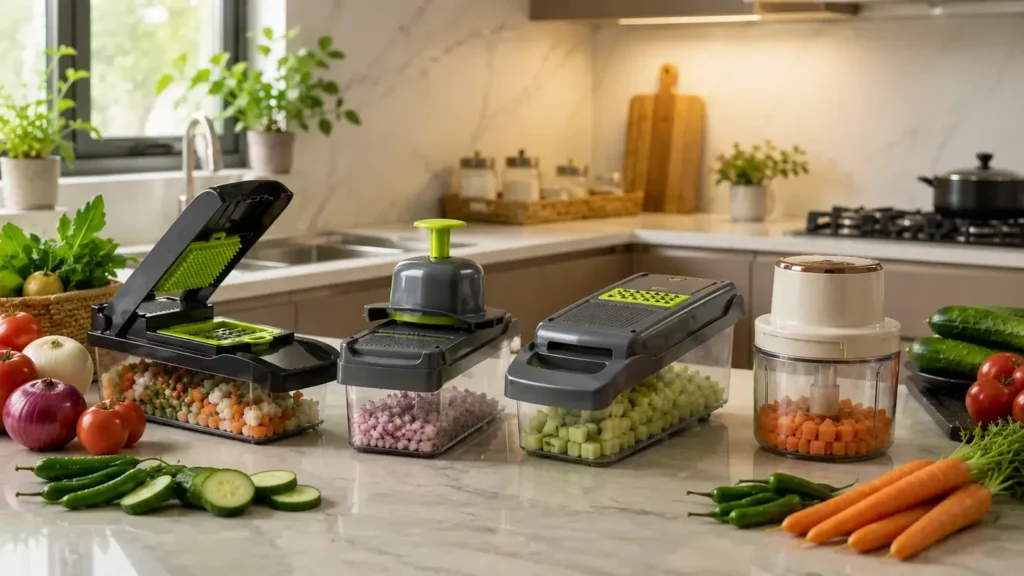
Ask almost anyone who cooks regularly at home and you’ll hear the same complaint: onions take forever. Not because they’re difficult to cut, but because so many Pakistani meals start with them.
Whether it’s chicken karahi on a weeknight, daal after a long day at work, qeema for lunch, or a big pot of biryani for a family gathering, the prep usually begins with onions, tomatoes and green chillies. Before the stove is switched on, there’s already chopping to do.
That is one of the main reasons vegetable choppers have become so popular in Pakistani kitchens over the past few years.
They are not miracle tools. They won’t replace every knife you own, and they shouldn’t be treated like commercial food processors. But for many households, they remove some of the repetitive work that makes cooking feel more time-consuming than it really is.
In practice, the biggest benefit isn’t saving ten or fifteen minutes on a single meal. It’s saving a few minutes almost every day. Over weeks and months, that convenience starts to add up.
The challenge is that there are now dozens of vegetable choppers available, ranging from basic pull-cord models to multifunction units with slicing, dicing and grating attachments. Some are excellent for daily prep. Others are better suited to larger families. And some look impressive on paper but offer functions many people rarely use.
That’s why this guide focuses on a simple question: which vegetable chopper makes the most sense for the way you actually cook?
Instead of ranking products purely by price or feature count, we’ll look at who each option is best suited for, where it fits into a real Pakistani kitchen, and which buyers should probably skip it.
If you just want the short version, here it is:
For most households, the 16-in-1 Multifunctional Vegetable Chopper is the safest recommendation because it covers the widest range of everyday prep tasks through chopping, slicing, dicing and grating functions.
If your kitchen routine revolves around onions, tomatoes and vegetables for daily cooking and you don’t necessarily need the largest function set, the 10-in-1 Vegetable & Fruit Chopper is the value pick most buyers should consider first.
For larger households, especially those preparing bigger quantities during Ramzan, weekend meal prep or family gatherings, the 2L and 3L Food Choppers deserve serious attention because capacity starts to matter more than function count.
There is a simple reason vegetable choppers continue to sell well: most Pakistani cooking involves preparation-heavy ingredients.
Think about a normal week. A few onions for salan. Tomatoes for karahi. Cucumber and onion for salad. Green chillies for daal. Garlic for curry.
None of these tasks are difficult individually. The problem is repetition.
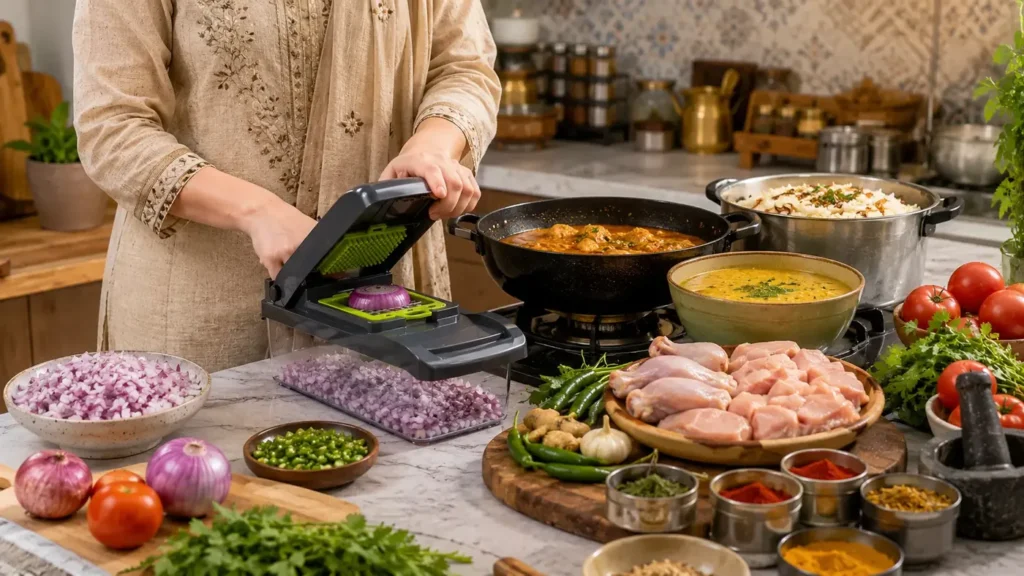
A common mistake buyers make is assuming they need a kitchen gadget because it performs complicated tasks. Usually the opposite is true. The products people end up using the most are often the ones that make ordinary jobs easier. Vegetable choppers fall into that category.
Many households find that once a chopper becomes part of the kitchen routine, it gets used far more often than expected because the barrier to preparation becomes lower. This is especially true during:
One thing worth remembering is that popularity alone doesn’t make a product the right choice. The best vegetable chopper for a family of six may be completely wrong for someone living alone. Likewise, a buyer looking for slicing and grating functions has very different needs compared to someone who only wants fast onion chopping.
That is why choosing based on use case is far more useful than choosing based on marketing claims. You’ll find the full range in our Kitchen Accessories collection.
This guide is based on the approved product data set for the featured products. We did not rank products solely by price. We also did not rank them solely by function count. Instead, we looked at factors that matter in actual kitchen use:
Would the product realistically be used several times a week? A product can have an impressive list of functions, but if most owners only use one or two of them, that matters when making a recommendation.
A single person, a couple and a joint family do not have the same requirements. Capacity becomes increasingly important as meal volumes increase. This is one reason the 2L and 3L Food Choppers are evaluated differently from the multifunction vegetable choppers.
Some buyers only want chopping. Others want slicing, dicing and grating as well. Rather than assuming one approach is better, we considered which type of buyer each product serves best.
Value does not automatically mean cheapest. In practice, the best value product is the one that solves your problem without paying for features you’ll never use.
This is an area many comparison guides ignore. We paid close attention to limitations stated in the approved product data. If a product specifically notes avoiding frozen ingredients, bones or very hard items, that limitation matters. A trustworthy recommendation should tell you not only what a product does well, but also where it may not be the right fit.
Before we look at each recommendation individually, here’s a quick comparison of the featured products. The table gives you a fast overview. The detailed recommendations that follow explain the reasoning behind each pick and, more importantly, who should buy it and who should skip it.
| Chopper | Best For | Capacity | Functions | Type | Price |
|---|---|---|---|---|---|
| 16-in-1 Vegetable Chopper | Best Overall | Not stated | Chop, slice, dice, grate | Manual | See live price |
| 10-in-1 Veg & Fruit Chopper | Best Value | Not stated | Chop, slice, dice, grate | Manual | See live price |
| 14-in-1 Vegetable Cutter | More Variety | Not stated | Slice, dice, grate, cut | Manual | See live price |
| 2L Food Chopper | Regular Family Prep | 2L | Chop | Manual | See live price |
| 3L Food Chopper | Large Families | 3L | Chop | Manual | See live price |
| Mini Manual Speedy Chopper | Small Kitchens | Not stated | Chop | Manual | See live price |
| 1.5L Manual Food Chopper | Small Households | 1.5L | Chop | Manual | See live price |
| Manual Spin Cutter | Budget Chopping | Not stated | Chop/Mince | Manual | See live price |
Swipe sideways to see the full table on mobile.
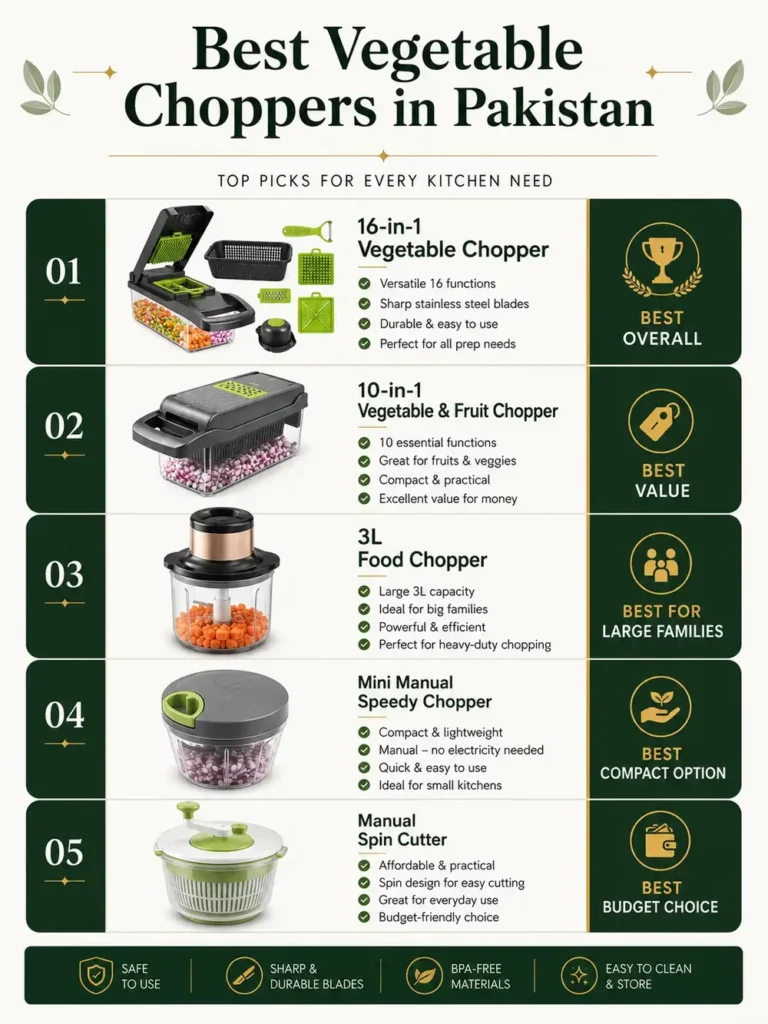
The comparison table is useful for narrowing down options quickly. The more important question, however, is why one person should buy the 16-in-1 while another may be happier with a simple pull-cord chopper. That’s where the individual recommendations become far more valuable than the numbers alone.
One thing worth remembering before we start: there is no single vegetable chopper that is perfect for everyone. The right choice depends on how you cook, how many people you cook for and whether your biggest frustration is chopping, slicing, grating or handling larger quantities.
A common mistake buyers make is comparing products that were designed for completely different jobs. For example, someone looking at a 3L Food Chopper and a 16-in-1 Vegetable Chopper might assume one is automatically “better.” In reality, they solve different problems.
The goal is not to buy the most impressive product. The goal is to buy the one that fits naturally into your kitchen routine.
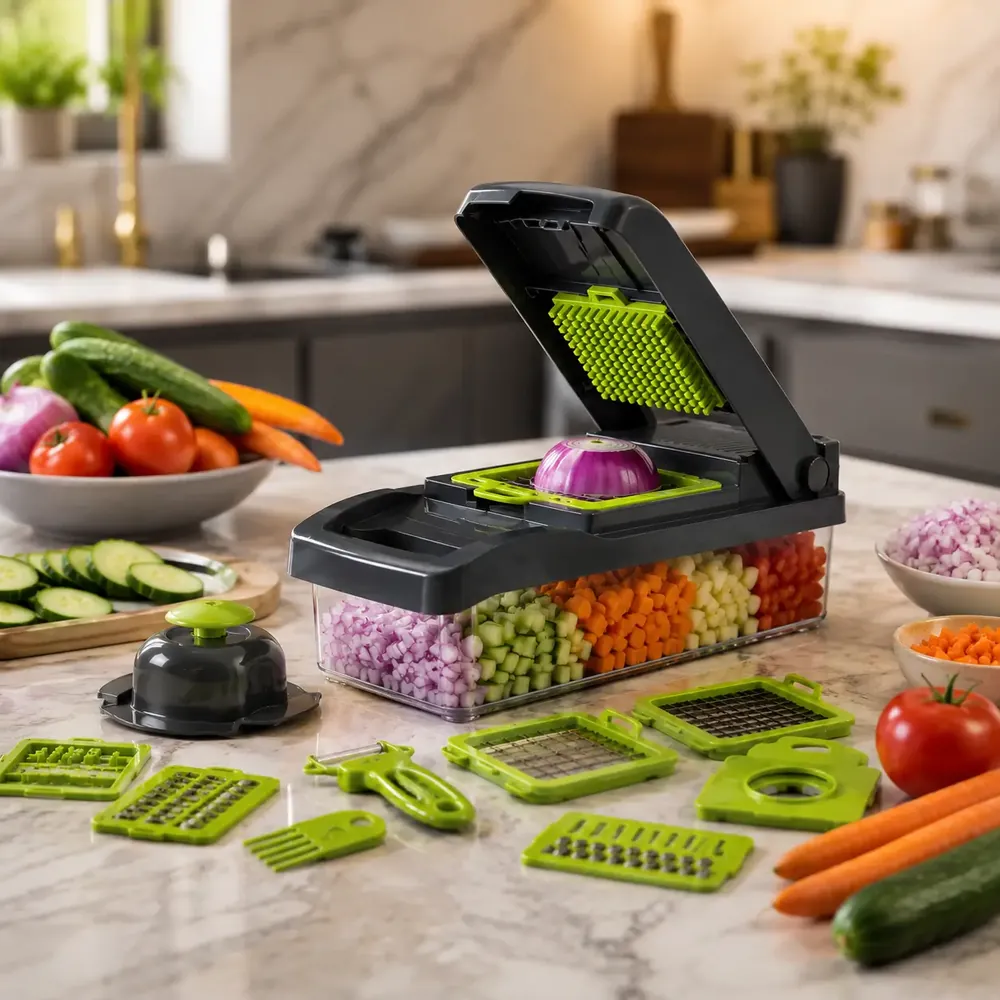
If someone asked me for a single recommendation without giving me any other information, this is where I would start. Not because everyone needs sixteen functions. Most people probably don’t.
The reason this product earns the “Best Overall” recommendation is because it solves the widest variety of everyday kitchen tasks without forcing buyers into multiple separate tools.
In many Pakistani kitchens, preparation work changes from day to day. One evening you’re chopping onions and tomatoes for salan. The next day you’re preparing vegetables for pulao. A few days later you’re making a salad for dinner guests. The ability to switch between chopping, slicing, dicing and grating is what makes this option attractive.
Another factor worth mentioning is confidence. It is the only product in this comparison with published reviews in the approved data set. That doesn’t automatically make it better than every other option, but it does provide an additional trust signal that some buyers appreciate.
For most households, this is the safest recommendation. Not because it is the most advanced option — because it is the least likely to leave you wishing you had bought something more capable six months later.
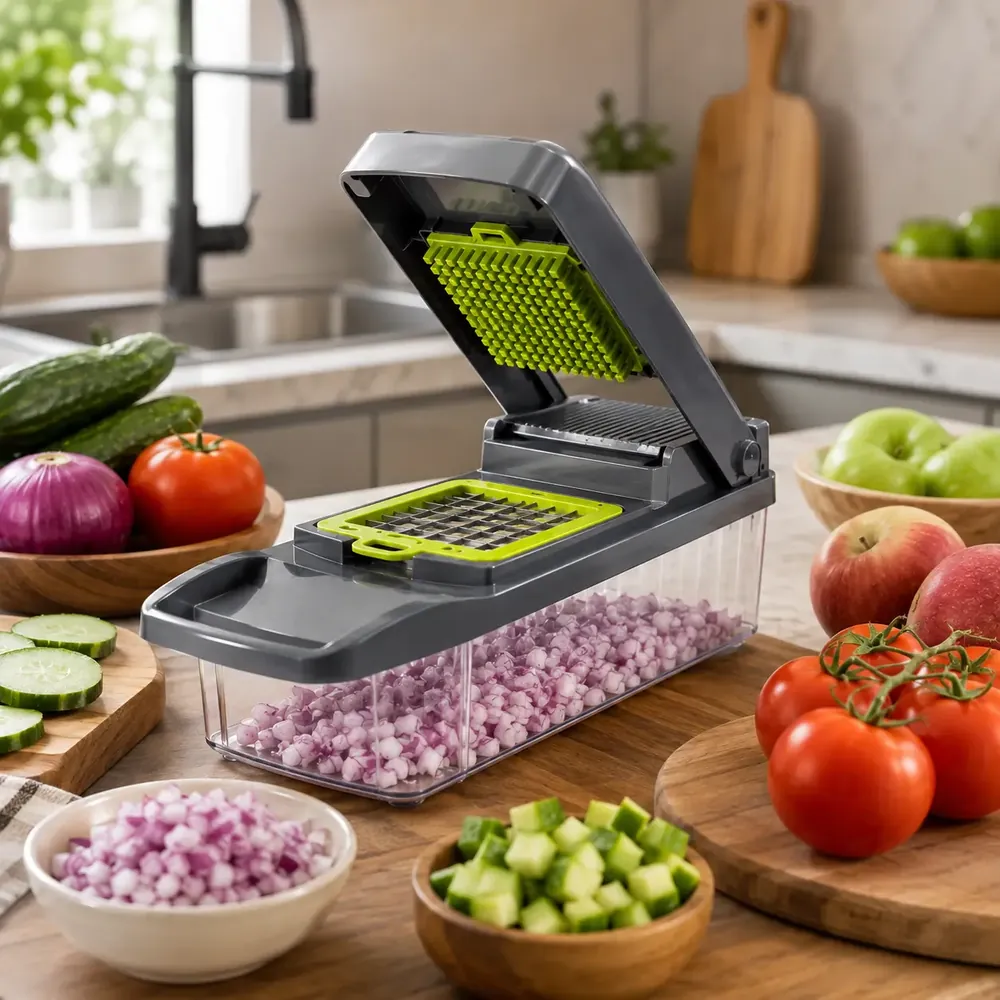
This is probably the most important recommendation in the entire guide. Why? Because most buyers do not actually need the 16-in-1. They think they do. But they don’t.
The biggest decision most people will make is choosing between the 16-in-1 and the 10-in-1. On paper, the difference sounds significant. In practice, the gap is smaller than many buyers expect.
If your weekly cooking mostly involves onions, tomatoes, cucumbers, vegetables and occasional fruit preparation, the 10-in-1 already covers the core tasks many households use most often.
Many households find that once the excitement of a new kitchen gadget wears off, they consistently use only a handful of functions anyway. That reality is what makes this such a strong value recommendation.
For many buyers, this may actually be the smartest purchase in the comparison. Not because it does the most — because it may already do everything you realistically need.
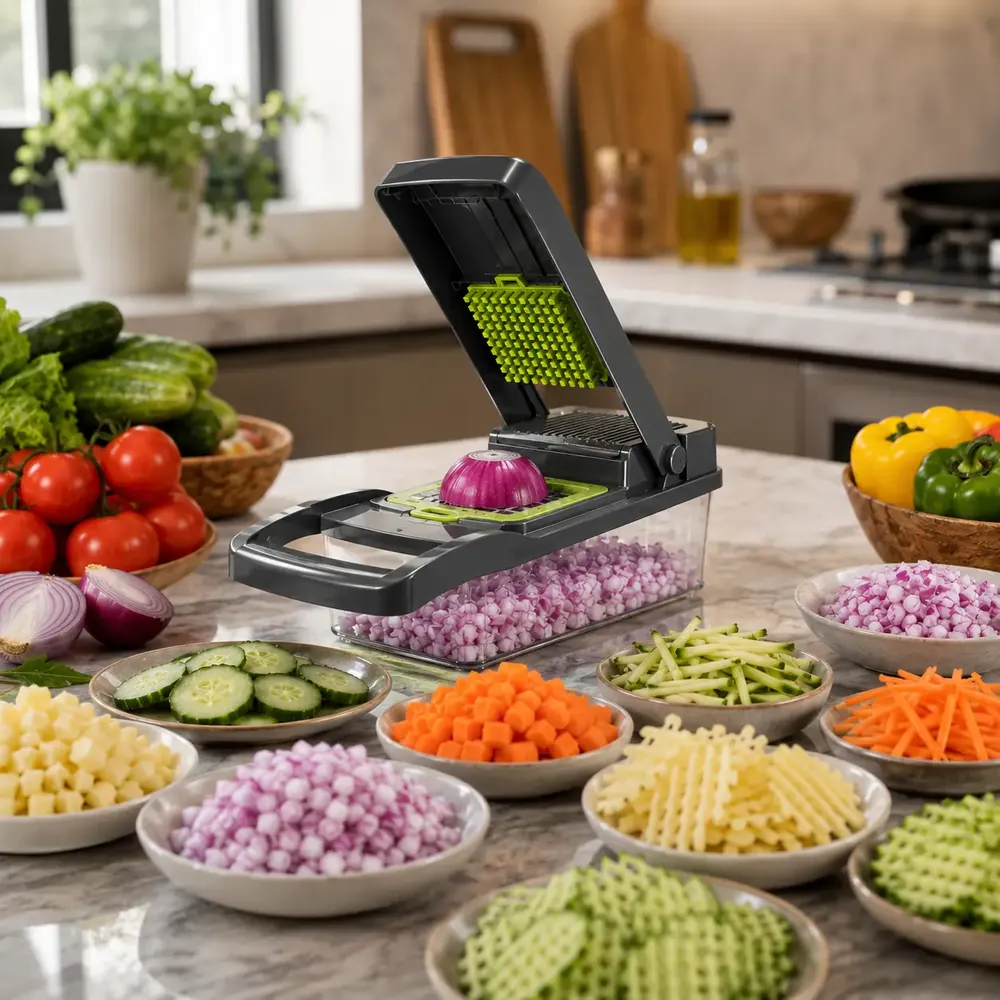
The 14-in-1 Vegetable Cutter sits in an interesting position. It isn’t the value-focused option. It isn’t the largest-capacity option. And it isn’t the highest-function option either. Instead, it occupies the middle ground.
Some buyers prefer that. Many people are uncomfortable choosing the cheapest product. They’re equally uncomfortable paying for the most expensive option. The 14-in-1 often appeals to buyers who want flexibility but still want to stay somewhere in the middle.
The 14-in-1 feels like a middle-ground recommendation. And sometimes middle ground is exactly where the right decision lives.
This recommendation has very little to do with function count. It is mostly about volume.
One thing worth remembering is that capacity becomes increasingly important as household size grows. If you’re cooking for five, six or more people regularly, preparation starts looking very different.
A few onions become several onions. A small bowl becomes a large bowl. Weekend biryani preparation becomes a bigger job. Family gatherings create more prep work. Joint-family kitchens create even more. This is where the 3L Food Chopper starts making sense.
The 3L Food Chopper is not the product most people need. But for the households that do need it, smaller alternatives can start feeling restrictive surprisingly quickly.
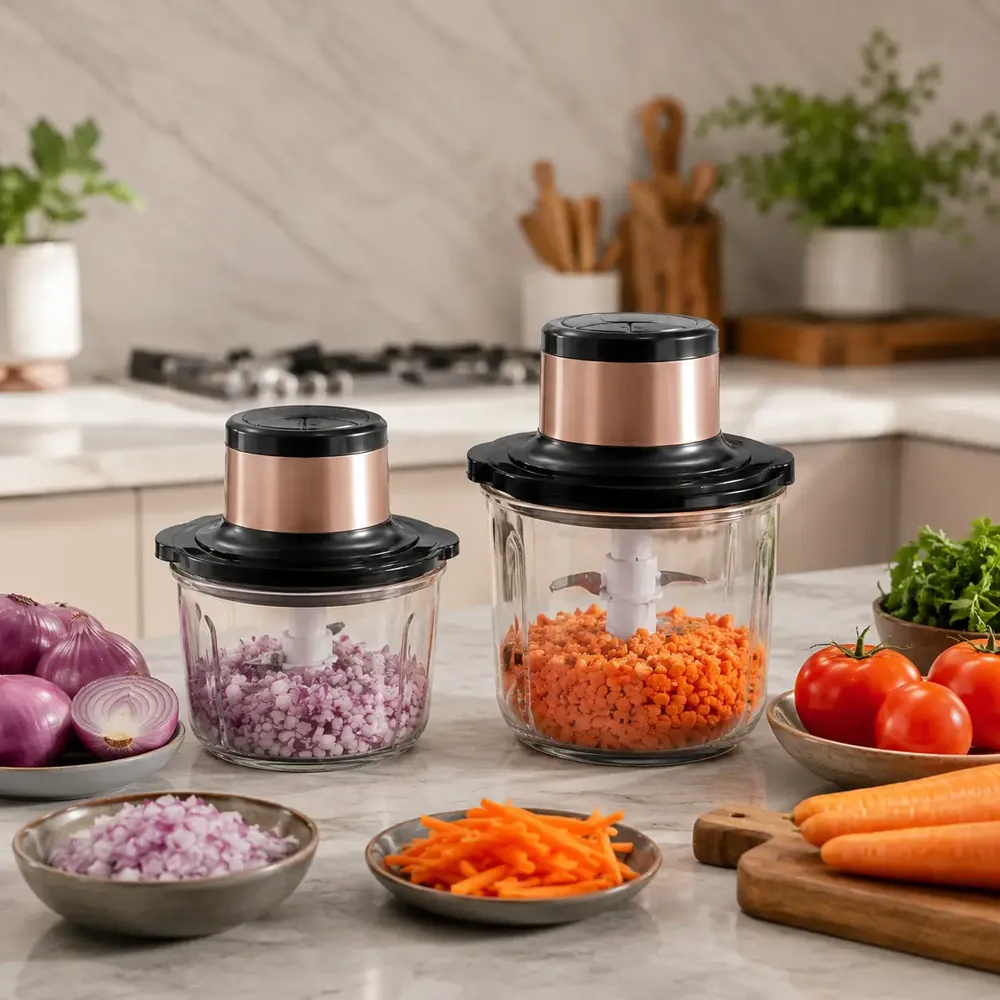
Think of the 2L Food Chopper as the more balanced sibling of the 3L version. It still offers meaningful capacity, but without moving all the way into the largest option available. For many families, this ends up being the practical sweet spot.
A common mistake buyers make is assuming bigger is always better. In reality, oversized kitchen tools often spend more time in cupboards than on countertops. The 2L model is easier to justify for households that cook regularly but don’t constantly prepare food for large groups.
For many family kitchens, this may be the most sensible capacity-based recommendation in the entire guide.
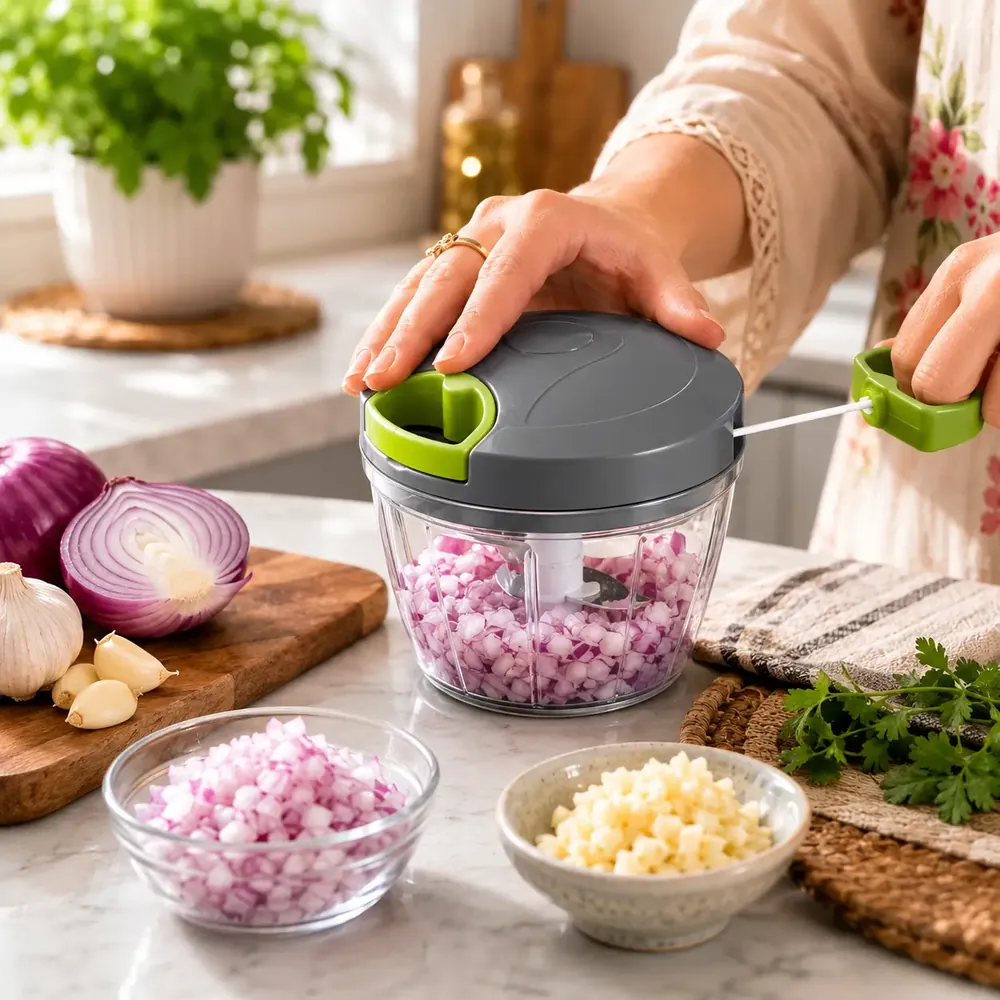
Not everyone has a large kitchen. And not everyone needs one. The Mini Manual Speedy Chopper is easy to understand because it focuses on a specific problem: quick everyday chopping.
This is the type of product that appeals to people living in apartments, students, newly married couples or anyone who wants something small, lightweight and easy to grab. In practice, convenience often beats complexity. A product that is quick to use tends to get used more often.
The best kitchen tool is often the one you actually use. That simple idea is what makes the Mini Manual Speedy Chopper appealing.
This recommendation fills an important gap. Some buyers find compact mini choppers too small. Others find larger family-focused models unnecessary. The 1.5L Manual Food Chopper sits comfortably in between.
For couples, small families and individuals who cook regularly, that balance can be attractive. Many households find that moderate capacity feels more practical than either extreme.
For smaller households, this is one of the easiest recommendations to justify because the size aligns naturally with everyday use.
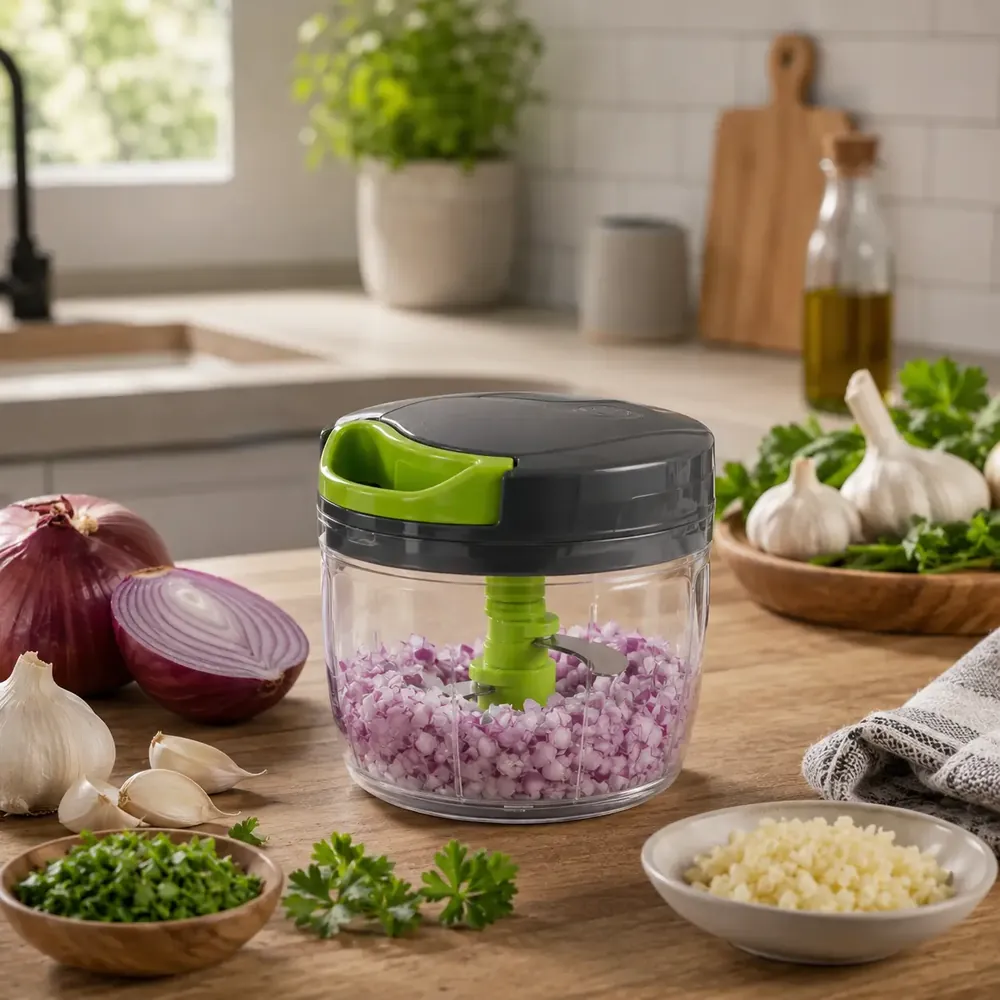
Every buying guide should have a budget recommendation. But a good budget recommendation should still solve a real problem. The Manual Spin Cutter earns its place because it provides a simple entry point for buyers who want basic chopping functionality without spending much.
That doesn’t mean everyone should choose it. If you need multiple preparation functions, you will quickly outgrow it. But if your goal is straightforward chopping for vegetables, herbs, garlic and similar ingredients, it becomes easier to understand its appeal.
The Manual Spin Cutter is not trying to be everything. And that honesty is part of its strength. For buyers who simply want an affordable chopping tool, it does exactly what a budget recommendation should do.
After helping people compare kitchen accessories for years, I’ve noticed that disappointed buyers usually don’t buy a bad product. They buy the wrong product for their needs. Most frustration starts long before the order is placed. It starts when someone focuses on the wrong buying criteria.
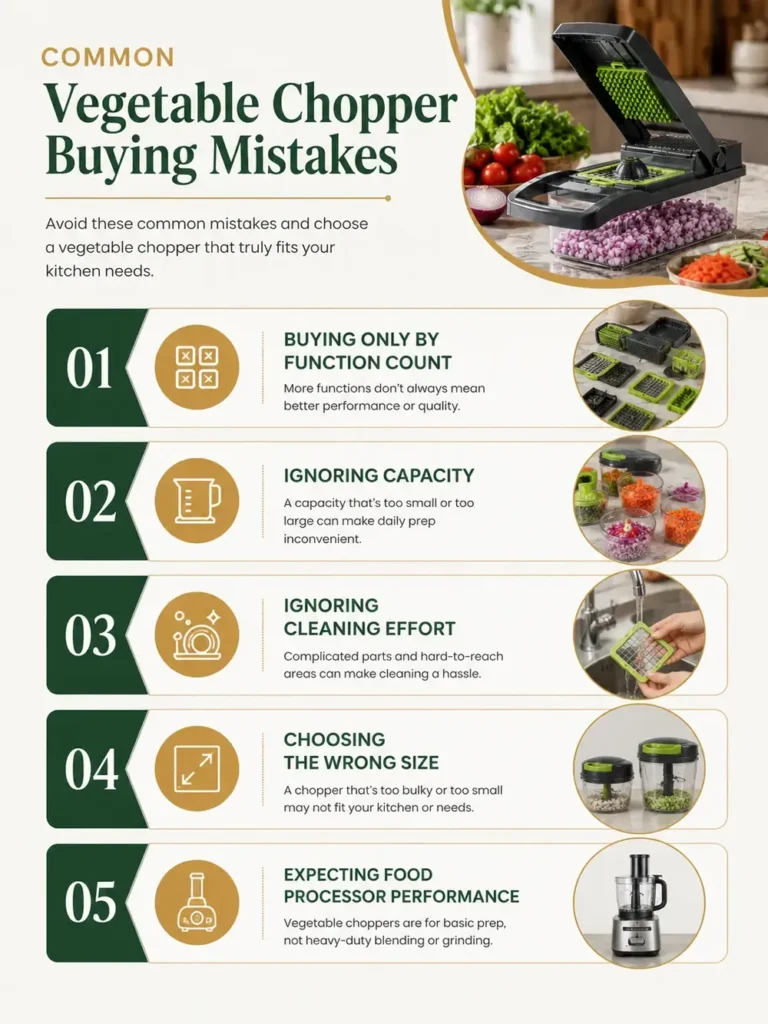
This is probably the most common mistake. A buyer sees “16-in-1” and immediately assumes it must be better than “10-in-1.” Sometimes that’s true. Sometimes it isn’t.
If you regularly prepare salads, garnishes, sliced vegetables and different cuts for presentation, additional functions can be genuinely useful. But if your daily routine is mostly onions, tomatoes, garlic and vegetables for salan, many of those extra functions may rarely leave the drawer. One thing worth remembering: unused features are not value. Useful features are value.
Everyone wants a good deal. That’s normal. But kitchen tools are slightly different from many other purchases. The cheapest option may save money today while creating frustration tomorrow.
For example, someone cooking daily for a family may eventually regret choosing a very basic chopper simply because it was cheaper. On the other hand, someone living alone may regret paying extra for features they never use. The goal isn’t spending less. The goal is spending wisely.
Capacity matters more than most buyers expect. A person cooking for themselves has completely different requirements from someone cooking for a joint family. This becomes especially obvious during Ramzan meal preparation, weekend meal prep, family gatherings, Eid cooking and hosting guests. A larger-capacity option may feel unnecessary on ordinary days but extremely useful when preparation volumes increase.
A vegetable chopper is a helper. Not a replacement for every kitchen tool. A common mistake buyers make is expecting one product to handle every cutting, chopping, grinding and processing task. That’s simply not what these products are designed to do. The best results usually come from understanding what the tool is meant to do and using it accordingly.
Many buyers focus entirely on performance. Few think about cleaning. Then reality arrives. If a tool is annoying to clean, people stop using it. In practice, a slightly simpler product that gets used three times a week is often more valuable than a complicated product that spends most of its life inside a cupboard.
This may sound strange in a buying guide, but it is an important question. Not everyone needs one. And being honest about that builds more trust than pretending every visitor should buy something.
You may not need a vegetable chopper if:
If most meals are ordered, purchased ready-made or prepared outside the home, a vegetable chopper will probably sit unused.
Many households already have equipment that covers similar tasks. Adding another tool may not improve your kitchen routine.
Restaurant kitchens, catering businesses and very high-volume cooking setups usually need equipment designed specifically for that environment.
If your primary need is grinding spices, masalas or similar ingredients, a chopper may not be the right first purchase.
Several products in this comparison specifically mention limitations around very hard ingredients, frozen produce or bones. Ignoring those limitations usually leads to disappointment.
A good buying decision starts with understanding your actual problem. Not every problem requires a vegetable chopper.
If I had to recommend one option to the average household without knowing anything else about their kitchen, I would start with the 16-in-1 Multifunctional Vegetable Chopper. Not because everyone needs sixteen functions — most people don’t — but because it covers the widest range of everyday kitchen tasks and suits the broadest range of buyers. For many households, it is the safest all-round choice.
For onions specifically, almost every chopper in this guide does the job, but two stand out. If onions are your main reason for buying, the Mini Manual Speedy Chopper is hard to beat — it’s quick to grab, quick to rinse, and perfect for the daily onions that go into salan, daal and qeema. If you also chop tomatoes, garlic and vegetables for the same dishes, the 16-in-1 handles onions cleanly alongside everything else. A practical tip: cut the onion into rough quarters first and don’t overfill the bowl. That keeps the pieces even instead of turning watery, which is the usual complaint people have about onions in any chopper.
For many Pakistani kitchens, yes. The reason is simple: most home cooking involves repetitive preparation work. Onions for salan. Tomatoes for karahi. Vegetables for daal. Salad for dinner. A manual vegetable chopper helps reduce that repetition. Many households find they use these products far more frequently than expected because the daily tasks they simplify are so common.
It depends on what frustrates you most. If you want slicing, dicing and grating in addition to chopping, a multifunction model generally makes more sense. If your goal is mainly quick chopping of vegetables, herbs and similar ingredients, a pull-cord food chopper may be the more practical choice. One thing worth remembering is that these products solve different problems. Comparing them purely by feature count can be misleading.
Usually fewer than you think. Many buyers become excited by large function counts. Then, after a few months, they discover they consistently use only a handful of those functions. Think about how you actually cook — not how you imagine yourself cooking. That answer usually leads to a better decision.
Yes. That is exactly the type of kitchen preparation these products are commonly used for. In fact, daily onion and tomato preparation is one of the biggest reasons vegetable choppers have become so popular in Pakistan. Always follow any product limitations listed on the product page.
For smaller households, compact or moderate-capacity options often make more sense. For larger families, joint-family homes and frequent meal prep, capacity becomes much more important. The right answer depends less on the product and more on how many people you typically cook for.
Yes. All products featured in this guide are manual models. That means they can be used without electricity. For many households, that remains one of their biggest practical advantages.
The answer depends on what you’re buying. Basic options are available in lower price bands, while larger-capacity or multifunction products sit in higher price ranges. A better question is: what tasks do you need the product to perform? Once you answer that, choosing the right price band becomes much easier.
After comparing these products, one conclusion becomes clear: most people do not need the most advanced vegetable chopper. They need the one that fits naturally into the way they cook.
That sounds obvious. But it is where many buying decisions go wrong. People often shop for the kitchen they wish they had rather than the kitchen they actually use.
The buyer who cooks for a joint family has different needs than the buyer living alone. The person preparing weekend biryani for relatives has different priorities than someone making a quick weekday dinner. And the person who enjoys salads and presentation cuts will naturally value different functions than someone who simply wants onions chopped faster.
That is why there is no universal “best” vegetable chopper. There is only the best option for your situation.
Before placing an order, ask yourself three questions:
Answer those honestly and the right choice usually becomes obvious. That is ultimately what a good buying guide should do. Not convince you to buy more. Help you buy smarter.
Start by looking at the product pages for the models that match your cooking style and household size. Focus on the product that fits your routine — not the one with the biggest number in its name.
Shop Kitchen Accessories
Muhammad Muneeb Uddin writes AL MEHRAN TRADERS' home, kitchen and cleaning buyer's guides. He focuses on hands-on, practical comparisons - how products actually hold up in everyday Pakistani households - so readers can choose the right tool for their needs and budget without overpaying.

Handpicked home essentials, delivered across Pakistan. Where taste meets detail.