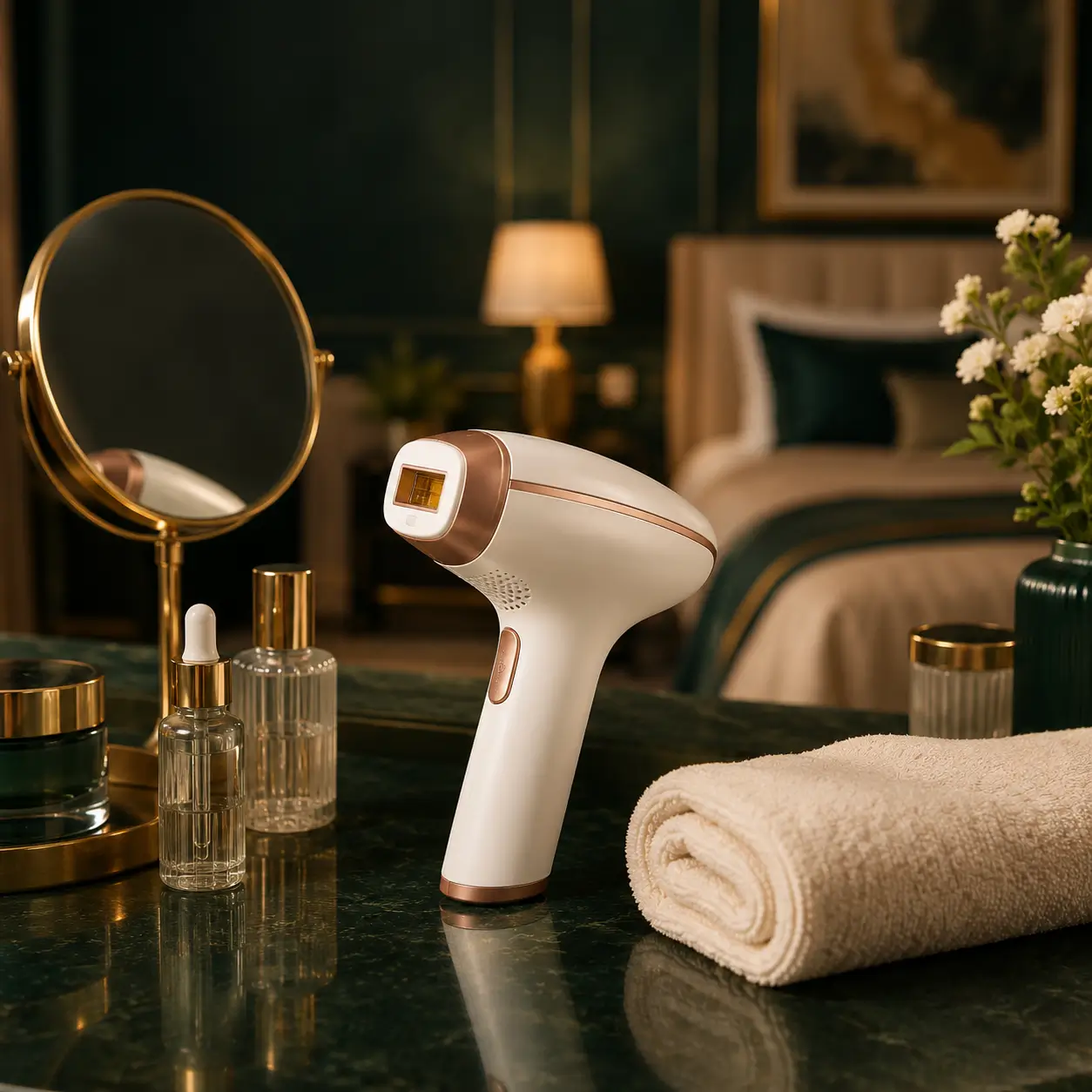
If you’ve ever added up what you spend on waxing appointments, threading sessions, disposable razors or salon visits over a year, the total can be surprisingly high. For many people in Pakistan, hair removal isn’t a one-time purchase. It’s a recurring expense that quietly becomes part of the monthly budget.
That’s one reason more people are looking at at-home IPL devices. The other is convenience. Between work, university, family commitments and traffic, finding time for regular salon appointments isn’t always easy. During Ramzan, wedding season or busy weeks, personal care routines are often the first thing to be postponed.
At-home IPL has attracted attention because it promises something different from shaving or waxing. Instead of removing hair for a few days or weeks, it aims to reduce regrowth gradually over time through repeated treatments. That sounds appealing, but it also raises genuine questions.
Does it actually work?
Is it safe to use at home?
Is it really “permanent”?
And is spending several thousand rupees on an IPL device actually better value than continuing with salon visits?
Those are exactly the questions this guide answers.
Rather than repeating marketing claims, we’ll explain what IPL is, who it’s suitable for, who should avoid it, how it compares with salon laser treatment, and whether it makes financial sense for Pakistani buyers. We’ll also look at the verified products available from AL MEHRAN TRADERS and explain where each one fits, including when a simpler alternative such as an epilator or trimmer may actually be the smarter purchase.
One thing worth remembering from the start is that the right hair-removal method depends on your goals, your hair type and your expectations. A device that works well for one person may not be the right choice for someone else. Understanding those differences is far more valuable than simply buying the most expensive option.
At-home IPL (Intense Pulsed Light) devices can provide long-term hair reduction when used consistently over multiple sessions. They are generally most suitable for people with darker hair and lighter to medium skin tones, while results are typically less effective on very light, grey or red hair. They are not designed to deliver instant or permanent hair removal after a single treatment.
If you’re looking for a long-term at-home solution and are prepared to follow a treatment schedule, an IPL device can be a worthwhile investment compared with ongoing salon visits. If you’re working with a very limited budget, want immediate hair removal, or aren’t a suitable candidate for IPL, an epilator or grooming trimmer may be a more practical choice.
Throughout this guide, we’ll compare these methods honestly, explain the safety considerations that matter, and help you decide which option best fits your needs without exaggerating what any product can realistically deliver.
Search for “IPL hair removal” online and you’ll find two extremes.
One side claims it’s a miracle solution that gets rid of unwanted hair forever. The other says it doesn’t work at all and is a waste of money.
The reality sits somewhere in the middle.
In practice, most disappointment comes from buying the wrong type of device, expecting unrealistic results, or using it incorrectly. That’s why this guide focuses on helping you make an informed decision rather than persuading you to buy a particular product.
Pakistani buyers also face questions that many international guides don’t answer clearly.
For example:
Those questions deserve honest answers because the upfront cost of an IPL device is higher than buying a razor or booking a waxing appointment. At the same time, recurring salon visits also add up over months and years.
For many working professionals, university students living in hostels, and families managing busy schedules, convenience matters almost as much as cost. Being able to complete a treatment session at home instead of planning another salon visit can be a genuine advantage.
One thing worth remembering is that convenience alone shouldn’t drive the decision. The treatment method also needs to match your hair colour, skin tone and expectations. Buying the wrong method simply because it’s popular often leads to disappointment.
That’s why we’ll compare IPL with other options available from AL MEHRAN TRADERS, including an epilator and grooming trimmers, so you can choose the method that actually fits your needs instead of assuming every product solves the same problem.
This isn’t a “top 10” list built around affiliate commissions or copied manufacturer claims.
Every recommendation in this guide is based on the verified product information available for the products currently offered by AL MEHRAN TRADERS. Where a specification isn’t stated, we don’t guess. If something isn’t confirmed, we simply leave it unstated rather than filling the gap with assumptions. That approach may sound less exciting, but it’s considerably more useful for buyers.
When comparing the products, we focused on factors that genuinely influence a purchasing decision:
Not every product removes hair in the same way.
The hero product in this guide uses IPL (Intense Pulsed Light) technology for gradual, long-term hair reduction through repeated treatments.
The alternatives use completely different approaches, including physical hair removal or trimming. Comparing them purely on price would be misleading because they’re designed for different goals.
Price matters, but value matters more.
A higher upfront price may still make sense if the product is intended for long-term use, while a lower-priced alternative can be the smarter choice for buyers who simply want an affordable way to manage unwanted hair.
A mistake many buyers make is assuming the cheapest option automatically offers the best value. In reality, the best purchase depends on what you’re trying to achieve.
We also looked at how each product fits into real routines.
Someone preparing for a wedding, travelling frequently for work or trying to reduce regular salon appointments may value convenience differently from someone who only needs occasional grooming.
Similarly, a household shopping on a tighter budget may prefer a reusable epilator or trimmer over investing in an IPL device immediately.
Every product has limitations, and ignoring them doesn’t help anyone.
For example, the approved product information clearly explains that the IPL device works best for darker hair on lighter to medium skin tones and that results vary depending on the individual. It also makes it clear that long-term hair reduction requires multiple treatment sessions rather than delivering instant permanent results.
Those limitations aren’t negatives. They’re realistic expectations that help buyers decide whether the product is genuinely suitable for them.
If someone asked me which buying guides are the most useful, I’d always choose the ones that explain who shouldn’t buy a product as clearly as they explain who should. That’s the approach we’ll follow throughout this guide.
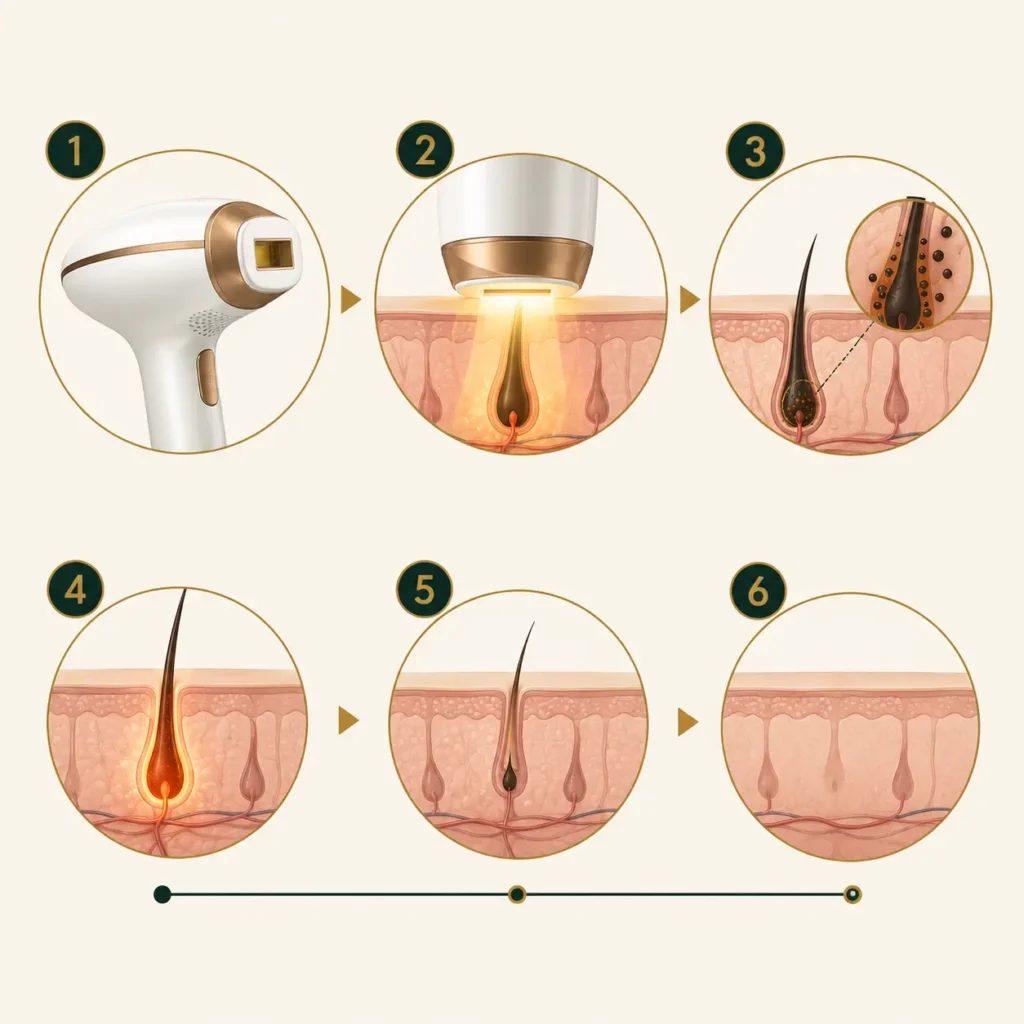
Short answer: IPL stands for Intense Pulsed Light, a light-based hair reduction technology designed to gradually reduce hair growth over multiple treatment sessions.
One point that often causes confusion is the name itself. Many people search for “at-home laser hair removal,” but the majority of home-use devices—including the one featured in this guide—use IPL rather than a true laser.
That distinction matters because they’re not the same technology.
A salon may use diode laser or other professional laser systems, while an at-home IPL device emits broad-spectrum pulses of light. Both aim to target the pigment (melanin) inside the hair, but they deliver that energy differently.
For most buyers, though, the more important question isn’t whether the technology is technically a laser.
It’s whether it can realistically reduce unwanted hair when used correctly.
The answer is yes—but only when expectations are realistic and the device suits the user’s hair and skin type.
One thing worth remembering is that IPL isn’t designed to replace every hair-removal method overnight. Think of it as a gradual process that aims to reduce future hair growth instead of simply removing visible hair today.
That’s why consistency matters much more than a single treatment session.
Short answer: IPL works by directing controlled pulses of light toward the pigment inside the hair. That light energy is absorbed by the hair, helping reduce future growth over repeated treatment sessions.
Hair doesn’t all grow at the same time.
At any given moment, different hairs are at different stages of their growth cycle. Because of this, a single IPL session cannot treat every hair equally.
That’s why treatments are repeated over several weeks.
Each session targets another group of hairs that have entered the active growth phase, gradually reducing the amount of hair that grows back.
In practice, this explains why people sometimes think IPL “isn’t working” after only one or two sessions.
The reality is that they haven’t completed enough treatments yet.
Another important factor is hair colour.
Because IPL relies on pigment absorbing light, it generally performs best on darker hair. Very light blonde, grey or red hair contains less of the pigment needed for the treatment to work effectively.
Skin tone also plays an important role.
The approved product information explains that the device is generally most suitable for light to medium skin tones with darker hair. That’s because the light energy needs to target the hair rather than being absorbed excessively by surrounding skin.
Understanding these basics makes it much easier to decide whether IPL is likely to suit you before spending money on a device.
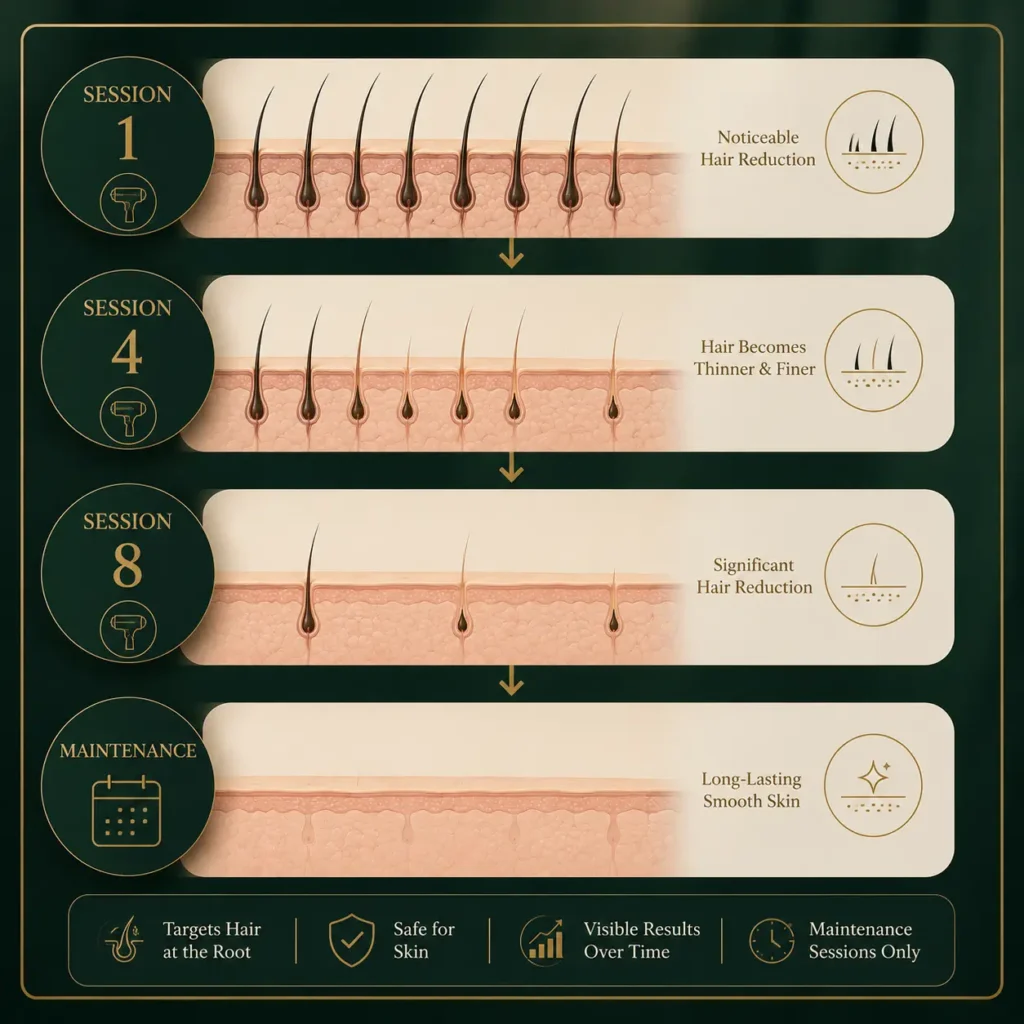
Short answer: Yes—at-home IPL can be effective for long-term hair reduction when used consistently and by people who are suitable candidates for the technology.
One reason IPL receives mixed reviews online is that people often compare completely different situations.
Someone with dark hair who follows the recommended treatment schedule may see encouraging results over time.
Someone with grey hair or unsuitable skin characteristics may see very little change.
Neither experience is necessarily wrong.
They’re simply different starting points.
A mistake many buyers make is expecting salon-level results after a handful of sessions at home.
Home IPL devices are designed for convenience and gradual progress rather than delivering dramatic overnight changes.
If someone asked me whether IPL works, I’d answer like this:
It works best for the people it’s designed for.
That’s a much more useful answer than claiming it works perfectly for everyone.
Consistency also matters.
Skipping treatments, changing schedules frequently or stopping after a few sessions makes it much harder to judge whether the technology is actually working.
Like most long-term beauty routines, patience is part of the process.
Short answer: No. At-home IPL should be viewed as a method for long-term hair reduction, not permanent hair removal.
This is one of the most important points in the entire guide.
Marketing language often uses the word “permanent” very loosely, which creates unrealistic expectations.
A more accurate way to think about IPL is that it aims to reduce future hair growth over time.
Many people will still need occasional maintenance sessions to help maintain their results.
That’s completely normal and doesn’t mean the device has failed.
One thing worth remembering is that long-term hair reduction is still very different from shaving every few days or booking regular waxing appointments throughout the year.
For many households, reducing the frequency of unwanted hair growth can be a worthwhile outcome even if maintenance treatments remain part of the routine.
If your expectation is to perform one treatment and never think about hair removal again, IPL is unlikely to meet that goal.
If your expectation is to gradually reduce regrowth and rely less on temporary methods over time, IPL is a much more realistic option.
That difference in expectations often determines whether buyers end up satisfied with their purchase.
Short answer: Yes, at-home IPL can be safe when used exactly as instructed and by people who are suitable candidates for the technology. Like any light-based treatment, it isn’t appropriate for everyone.
Safety is usually the first concern buyers have, and rightly so. Unlike a kitchen gadget or home appliance, an IPL device works directly on your skin. That’s why understanding the basic precautions is far more important than rushing into your first treatment.
One thing worth remembering is that using a higher intensity doesn’t automatically produce better results. Starting cautiously and allowing your skin to respond is generally the smarter approach.
Here are the most important safety practices every first-time user should know:
Before treating a larger area, test the device on a small patch of skin and wait to see how your skin responds.
A patch test takes very little time but can help identify irritation before you commit to a full treatment session.
If your device offers multiple intensity levels, begin with a lower setting and increase only if your skin tolerates it comfortably.
Many buyers assume they should start at the highest level immediately. In practice, building up gradually is usually the safer approach.

IPL produces bright flashes of light.
Never direct flashes towards your eyes and always follow the eye-protection guidance supplied with the product. Eye safety isn’t an optional extra—it’s one of the most important parts of using any IPL device responsibly.
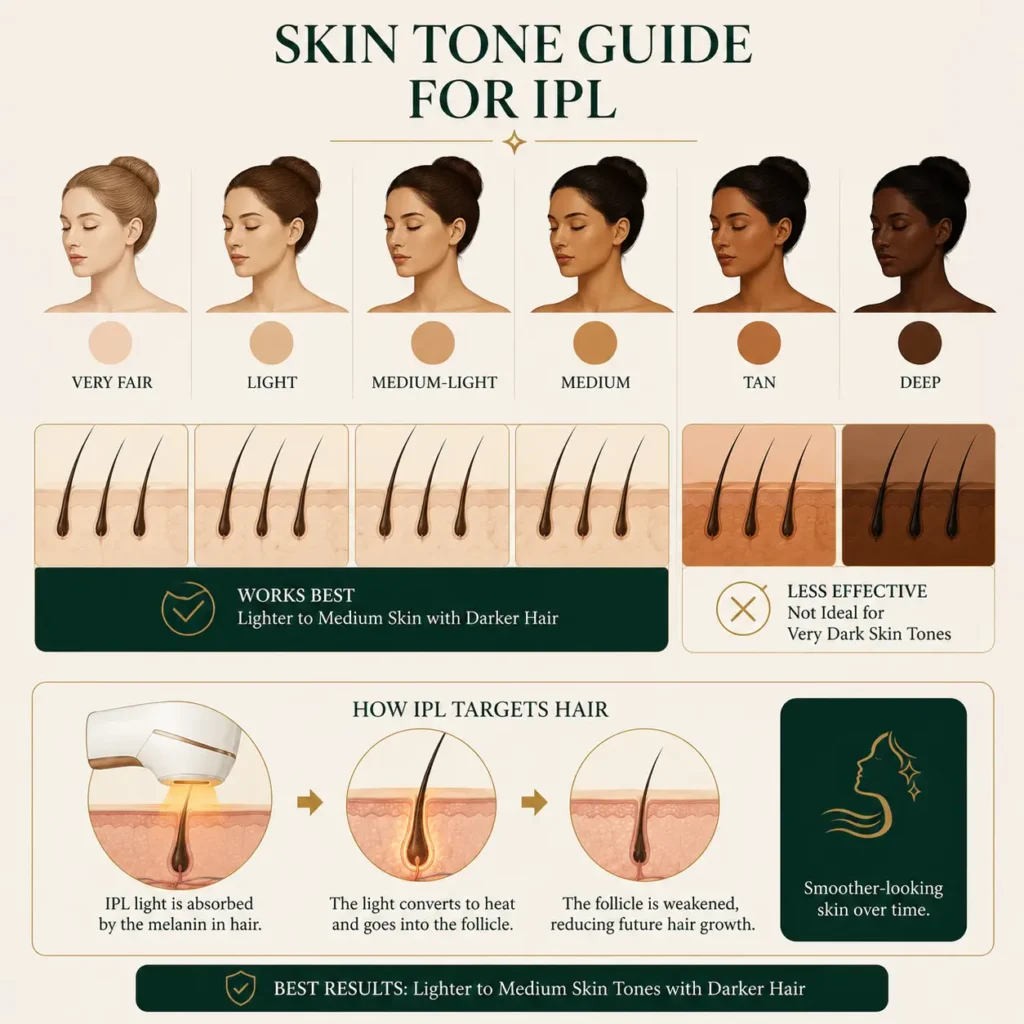
The approved product information explains that the device is generally intended for people with light to medium skin tones and darker hair.
Very dark or heavily tanned skin may absorb light differently, increasing the risk of unwanted skin reactions. Likewise, very light, grey or red hair generally doesn’t respond as effectively because there is less pigment for the light to target.
Choosing the right treatment for your skin and hair type is more important than choosing the most expensive device.
Do not use IPL over:
Allow the area to heal fully before considering treatment.
At-home IPL is generally not recommended during pregnancy.
If you have an existing skin condition, take medication that increases sensitivity to light, or are unsure whether IPL is suitable for you, speak with a qualified dermatologist before starting treatment.
This guide provides general consumer information, not personalised medical advice.
One of the biggest questions Pakistani buyers ask is whether it makes more sense to buy an IPL device or continue paying for professional salon laser sessions.
There’s no universal winner because both options suit different people.
Salon laser treatments are performed using professional equipment under trained supervision. That can provide reassurance for buyers who are nervous about treating themselves or who prefer professional guidance.
The trade-off is cost and convenience.
Professional treatments usually involve multiple appointments spread over several months. That means repeated travel, appointment scheduling and ongoing expenses.
An at-home IPL device works differently.
Instead of travelling to a clinic every few weeks, treatments can be completed whenever your schedule allows.
For working professionals, university students and parents juggling family responsibilities, that flexibility can be one of the biggest advantages.
If someone asked me which option offers better value, I’d say this:
Choose salon laser if professional supervision is your highest priority.
Choose at-home IPL if convenience, privacy and long-term value matter more—and if you’re happy to follow a consistent treatment routine yourself.
Neither option is “better” for everyone.
The right choice depends on your priorities.
Waxing remains one of the most common hair-removal methods across Pakistan.
It’s familiar, widely available and removes hair immediately.
The downside is that it needs to be repeated regularly.
Many people also find waxing uncomfortable, especially on sensitive areas, and recurring salon appointments become another monthly expense.
IPL approaches the problem differently.
Instead of removing hair that has already grown, it aims to reduce future growth over repeated treatments.
That means you won’t get the instant smoothness that waxing provides after a single session.
The benefit comes later through gradual reduction rather than immediate removal.
A mistake many buyers make is expecting IPL to replace waxing overnight.
That’s not how the technology works.
If immediate results are your priority for an upcoming wedding, holiday or special occasion, waxing may still be the more practical option.
If your goal is to reduce long-term dependence on repeated waxing appointments, IPL becomes a much stronger consideration.
An epilator and an IPL device may both be used at home, but they solve different problems.
An epilator removes existing hair mechanically.
Once hair grows back, it needs to be removed again.
IPL aims to reduce how much hair grows back in the future.
That’s a very different long-term goal.
The approved product range at AL MEHRAN TRADERS includes both an IPL device and an electric hair removal epilator because different buyers have different priorities.
If your budget is limited and you’re simply looking for an affordable way to remove unwanted hair at home, an epilator can be a sensible purchase.
If you’re prepared to invest more upfront in the hope of reducing future hair growth over time, an IPL device is likely to be the better fit.
The reality is that neither product replaces the other completely.
They serve different needs, different budgets and different expectations.
Understanding that distinction usually leads to a much better buying decision than comparing them purely on price.
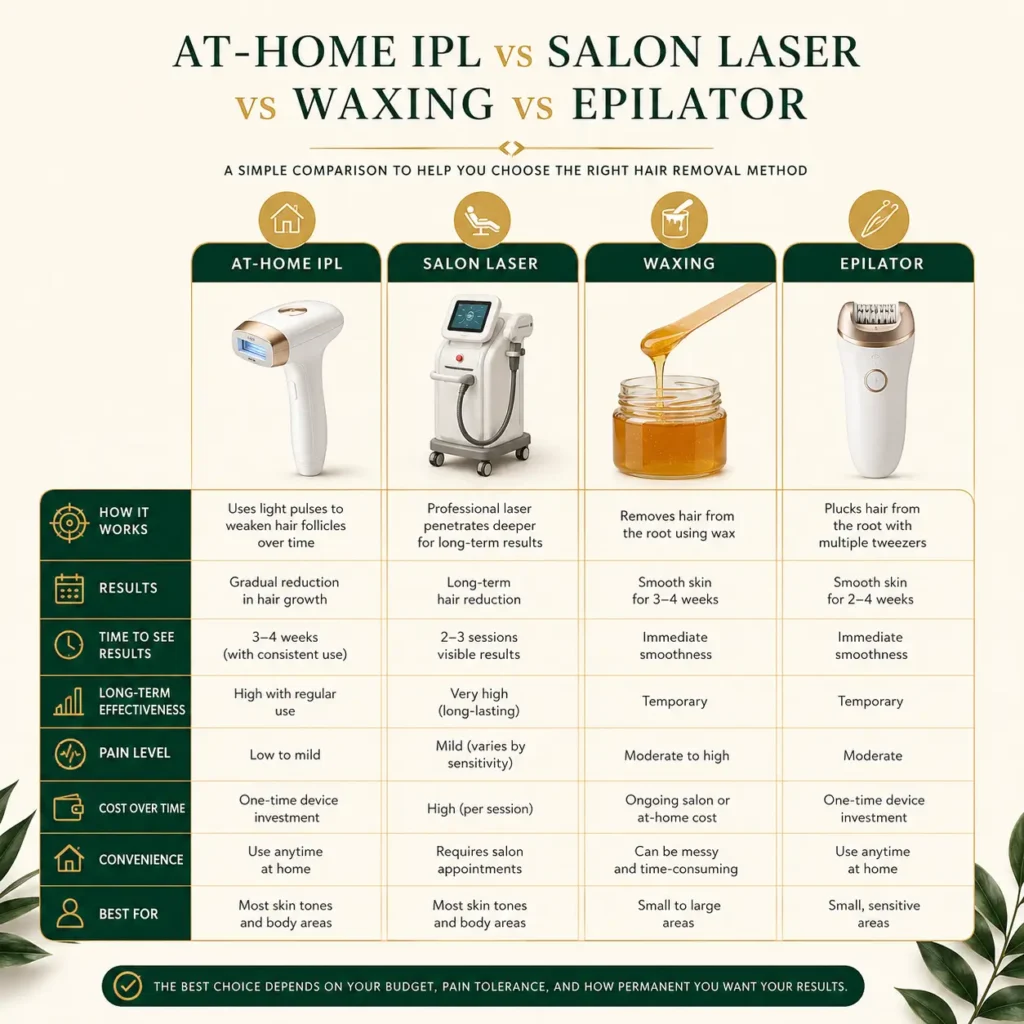
Choosing the right hair removal method isn’t just about price. It’s about matching the method to your expectations, budget and routine.
Some buyers want immediate results before a wedding or family event. Others are looking for a long-term solution that reduces regular salon visits. Looking at the strengths and limitations side by side makes that decision much easier.
| Method | Upfront Cost | Comfort Level | Results Last | Best For |
|---|---|---|---|---|
| At-Home IPL Device | Higher one-time investment | Mild warmth or light snapping sensation | Long-term hair reduction with maintenance | Buyers looking to reduce ongoing salon visits |
| Salon Laser | Higher ongoing cost over multiple sessions | Varies by clinic and treatment area | Long-term hair reduction | Those who prefer professional supervision |
| Waxing / Threading | Low per session but recurring | Often uncomfortable | Around a few weeks | Quick temporary hair removal |
| Electric Epilator | Budget-friendly | Moderate discomfort for some users | Temporary hair removal | Budget-conscious buyers wanting reusable at-home grooming |
| Trimming / Shaving | Low | Comfortable | Short-term | Fast routine maintenance |
Swipe horizontally to see the full comparison →
One thing worth remembering is that no single method is objectively “best.” The right choice depends on what you’re trying to achieve.
If reducing long-term maintenance is your goal, IPL deserves serious consideration.
If your priority is simply removing visible hair today at the lowest possible cost, an epilator, trimmer or waxing may be the more practical option.
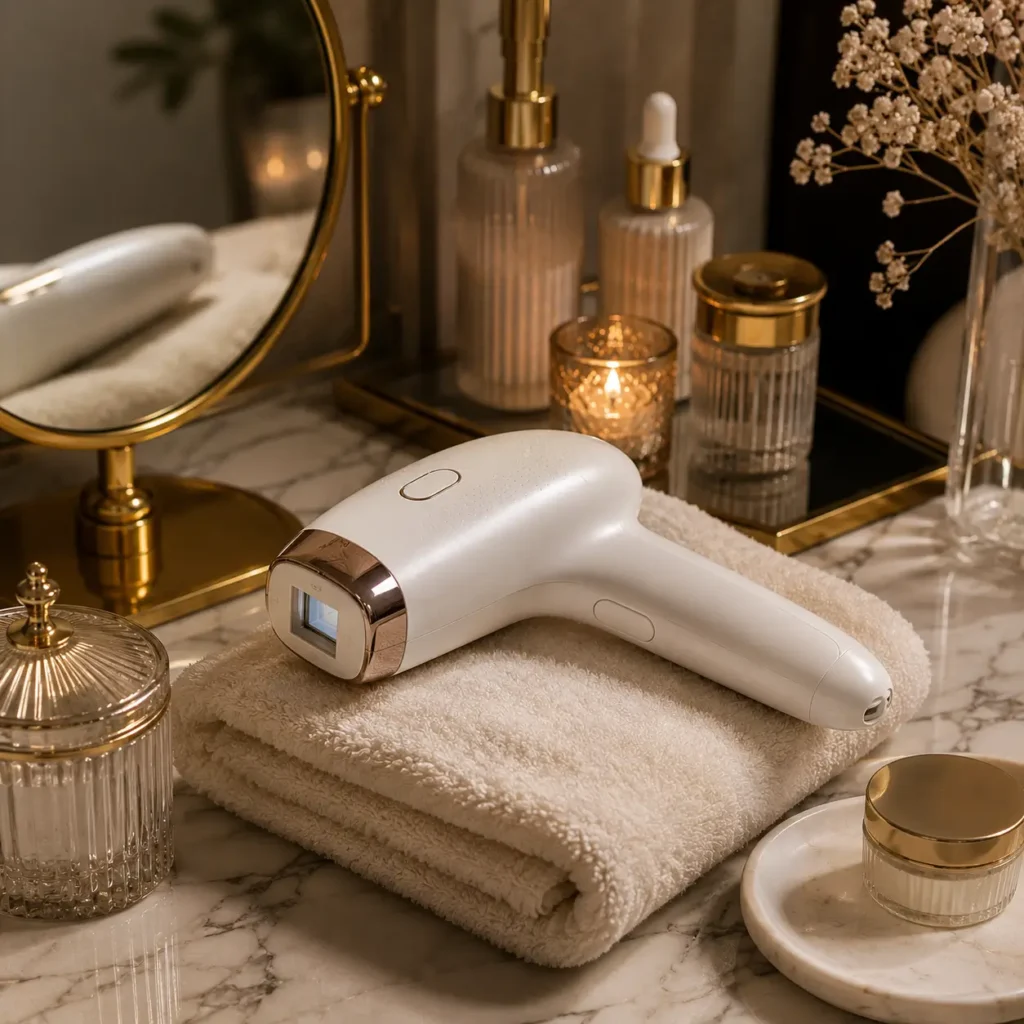
Best for: Buyers looking for long-term hair reduction at home.
If someone asked me to recommend just one product from this comparison for the average buyer, this would be my first recommendation.
Not because everyone needs IPL.
But because it solves a different problem from every other product in this guide.
Instead of repeatedly removing hair after it grows back, it aims to reduce future hair growth through consistent use. That long-term approach is what makes it stand out.
For someone who regularly books waxing appointments or has grown tired of constant shaving, the upfront investment can make considerably more sense than paying for repeated treatments over time.
The approved product information also positions this device as suitable for multiple treatment areas, making it a more versatile option than buying separate grooming tools for different parts of the body.
Why we recommend it:
In practice, this product makes the most sense for buyers who think in terms of months and years rather than the next few days.
Best for: Buyers wanting affordable reusable hair removal without the higher initial investment of IPL.
Not everyone is ready to spend several thousand rupees on an IPL device.
That’s perfectly reasonable.
For many students, first-time buyers or anyone working within a tighter budget, an electric epilator offers a far lower entry point while still providing a reusable at-home solution.
The trade-off is simple.
An epilator removes existing hair.
It doesn’t aim to reduce future hair growth in the same way IPL does.
That means regular use remains part of the routine.
Why we recommend it:
The reality is that this isn’t a cheaper version of IPL — it’s simply a different solution for a different type of buyer.
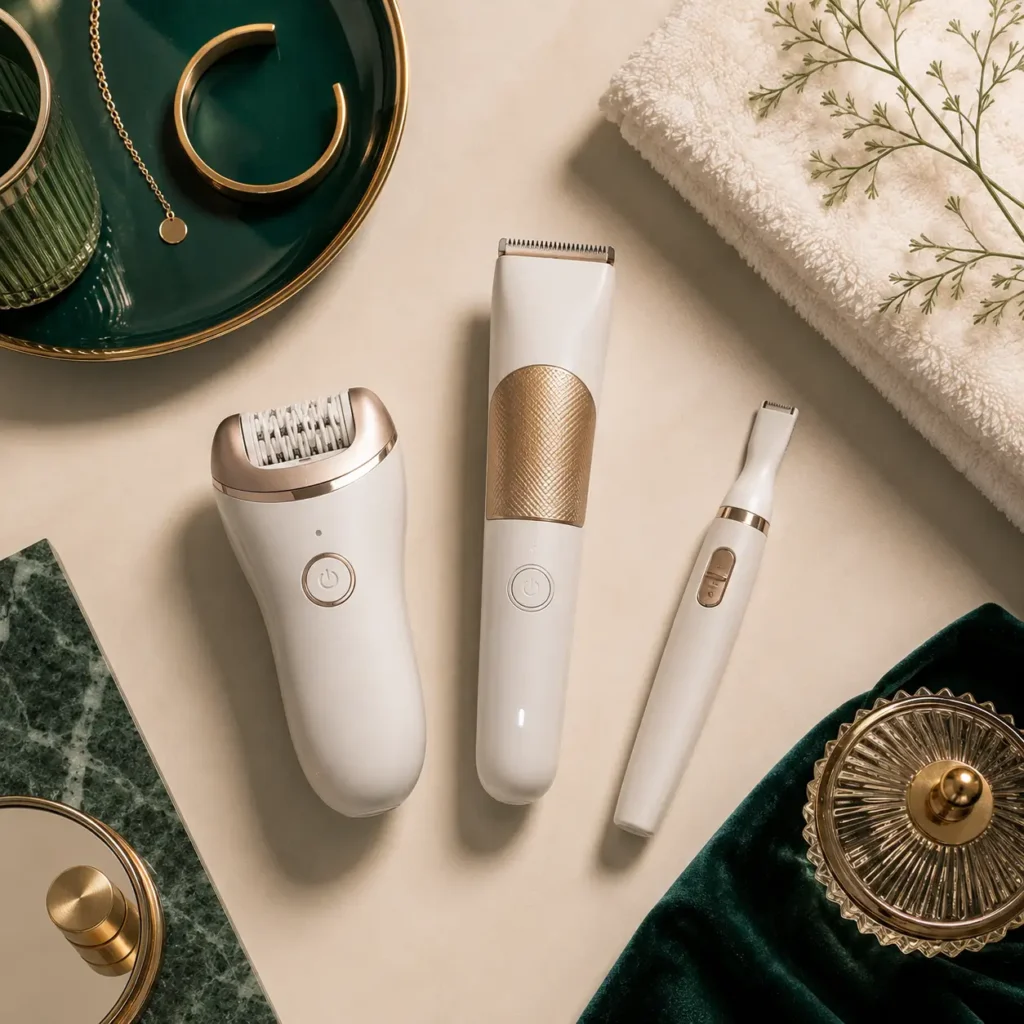
One thing this guide has intentionally avoided is treating every product as a direct competitor to the IPL device.
They’re not.
The IPL Permanent Laser Hair Removal Handheld Device Kit is designed for buyers looking for long-term hair reduction. The remaining products in this range are designed for everyday grooming and temporary hair management.
If your budget, lifestyle or expectations don’t match IPL, that doesn’t mean you’re making the wrong decision. It simply means a different product is likely to suit you better.
Best for: Everyday grooming with one device.
If your routine revolves around keeping facial or body hair neat rather than reducing future hair growth, the Kemei 3-in-1 Electric Trimmer makes much more sense than investing in IPL.
Many households prefer a versatile grooming tool because multiple family members can use it for different purposes. It’s also a practical choice for students living in hostels, professionals who travel regularly, or anyone who wants a quick grooming routine without scheduling treatments.
Why we recommend it:
For buyers who trim more often than they remove hair, this is a more sensible everyday purchase than an IPL device.
Best for: Precision trimming and personal grooming.
The T9 Professional Hair Trimmer belongs in a completely different category from IPL.
Instead of changing how hair grows, it’s designed to keep hair tidy whenever needed.
For many buyers, especially men looking after beard lines, necklines or regular grooming, that’s exactly what they need.
A mistake many buyers make is assuming every hair-removal product serves the same purpose.
In reality, trimmers are about appearance and maintenance, while IPL is about gradually reducing future growth.
Why we recommend it:
Ideal for keeping beard lines and edges tidy — just don’t expect it to change how much hair grows back.
Best for: Safe nose and ear hair maintenance.
This is the most specialised product in the comparison.
Rather than trying to be an all-purpose grooming tool, it’s designed for one specific job.
That focused purpose is actually its biggest strength.
If unwanted nose or ear hair is your concern, buying a dedicated trimmer is usually a smarter decision than trying to adapt another grooming device.
Why we recommend it:
A dedicated tool for one small job — and that focus is exactly why it handles delicate areas better than an all-purpose trimmer.
If I were choosing between these products, I’d start by asking a simple question:
Are you trying to reduce future hair growth, or are you simply trying to manage the hair you already have?
That single question usually makes the decision much easier.
There’s no benefit in paying for IPL technology if you’ll never commit to the treatment schedule it requires.
Likewise, if you’re already frustrated with years of shaving or waxing, buying another temporary solution may only postpone the problem rather than solve it.
Choosing the product that genuinely matches your routine is almost always a better decision than simply choosing the product with the lowest price tag.

Short answer: An at-home IPL device is best suited for buyers who want to reduce long-term dependence on shaving or waxing and are willing to follow a consistent treatment routine.
Not everyone needs IPL.
That’s probably the most important takeaway from this guide.
The technology can be an excellent investment for the right buyer, but it’s not something I’d recommend simply because it’s the most expensive product in the comparison.
If someone from my own family asked whether they should buy one, I’d ask them a few questions before recommending anything.
Many Pakistani households have a familiar routine.
Waxing appointment.
A few weeks later…
Book another appointment.
Repeat.
If you’re tired of that cycle and would prefer to manage treatments from home, IPL offers a different long-term approach.
Not everyone enjoys salon appointments.
Some buyers simply feel more comfortable completing treatments at home whenever it suits them.
Working professionals, university students and busy parents often value that flexibility just as much as the potential long-term savings.
One thing worth remembering is that IPL isn’t a one-week solution.
It rewards consistency.
If you’re willing to follow the recommended schedule over multiple weeks, you’re far more likely to appreciate what the technology is designed to do.
It’s easy to focus only on the initial purchase price.
The better question is:
“How much do I normally spend on temporary hair removal every year?”
For someone who regularly pays for salon waxing or repeatedly buys disposable razors and grooming products, the long-term maths can look very different from the upfront price tag.
Honest buying guides should explain who shouldn’t buy a product.
That’s often more valuable than listing another ten reasons to buy it.
IPL doesn’t remove every hair after one treatment.
If your goal is smooth skin before an upcoming wedding, Eid gathering or holiday next week, another temporary method will probably suit you better.
IPL is designed for gradual improvement, not immediate transformation.
The approved product information clearly explains that IPL performs best on darker hair with lighter to medium skin tones.
If your hair is grey, blonde or red, or if your skin isn’t suitable for IPL treatment, another method is likely to produce better results.
Buying a product outside its intended use usually leads to disappointment rather than success.
In practice, consistency matters more than buying the device itself.
A mistake many buyers make is using IPL two or three times, forgetting about it for several weeks, then deciding it doesn’t work.
That isn’t giving the technology a fair opportunity to deliver gradual results.
There’s nothing wrong with choosing a more affordable option.
If spending several thousand rupees isn’t practical right now, an electric epilator or grooming trimmer may genuinely be the smarter purchase.
The best buying decision isn’t always the one with the highest price.
It’s the one that realistically fits your budget and expectations.
After comparing different hair-removal methods, a few buying mistakes appear again and again.
Avoiding them will usually save both money and frustration.
The word “permanent” creates unrealistic expectations.
At-home IPL is better understood as a method for long-term hair reduction that requires multiple sessions and occasional maintenance.
That’s very different from expecting hair to disappear permanently after the first treatment.
Some buyers compare an IPL device with a trimmer as though they’re competing products.
They aren’t.
One aims to reduce future hair growth.
The other simply manages the hair that’s already there.
Buying becomes much easier once you decide which problem you’re actually trying to solve.
No technology works equally well for everyone.
Understanding whether IPL suits your hair colour and skin tone before purchasing is far better than discovering the limitations afterwards.
The cheapest product isn’t automatically the best value.
Likewise, the most expensive product isn’t automatically the best choice.
For some buyers, an affordable epilator will be exactly what they need.
For others, investing in IPL makes more financial sense over the long term.
The reality is that value depends on your routine, not the number on the price tag.
Waxing, trimming, epilating and IPL all work differently.
Comparing them fairly means understanding what each method is designed to achieve.
Once buyers understand that distinction, choosing between them becomes much simpler.
A good purchase isn’t about buying the most advanced product.
It’s about buying the product you’ll actually use consistently and that genuinely fits your lifestyle.
Yes, for the right candidate. At-home IPL can provide long-term hair reduction when used consistently over multiple treatment sessions. It generally works best on darker hair with lighter to medium skin tones. Results vary from person to person, which is why realistic expectations are important from the beginning.
Yes, when used correctly. Follow the product instructions carefully, perform a patch test before your first full treatment, avoid using the device near your eyes or on tattoos, large moles and broken skin, and make sure your skin and hair type are suitable for IPL. If you have a skin condition or medical concern, consult a qualified dermatologist before starting treatment.
Most users describe IPL as producing a mild warming sensation or a light snapping feeling against the skin rather than significant pain. Comfort levels vary depending on the treatment area and individual sensitivity, but it is generally considered more comfortable than waxing for many people.
IPL is designed to deliver gradual results rather than immediate changes. Because hair grows in different cycles, repeated treatments are needed before reductions become noticeable. Consistency matters far more than rushing through sessions or increasing intensity unnecessarily.
The approved product information indicates that the device is generally intended for people with lighter to medium skin tones and darker hair. Very dark or heavily tanned skin requires extra caution because light-based treatments may not be suitable. Always check the manufacturer’s guidance before beginning treatment.
Yes. Men can use IPL provided they are suitable candidates for the technology and follow the product instructions. Many buyers use IPL to manage unwanted body hair while continuing to use dedicated trimmers for beard shaping and routine facial grooming.
For buyers who would otherwise pay for repeated salon sessions over an extended period, an at-home IPL device may represent better long-term value. The exact comparison depends on individual treatment needs and local salon pricing, but many people appreciate the convenience of treating themselves at home rather than scheduling recurring appointments.
Not in the sense that hair disappears forever after one treatment.
A more accurate description is long-term hair reduction. Most people require multiple treatment sessions followed by occasional maintenance to help preserve their results. Understanding this distinction leads to much more realistic expectations.
Some IPL devices are suitable for certain facial areas according to the manufacturer’s instructions, while sensitive areas such as around the eyes should always be avoided. Always follow the guidance provided with your specific device.
At-home IPL is generally not recommended during pregnancy. If you’re pregnant or have any uncertainty about whether IPL is appropriate for you, speak with your healthcare professional before beginning treatment.

Buying an IPL device isn’t simply about replacing a razor or skipping your next waxing appointment.
It’s about deciding how you want to manage unwanted hair over the next few years.
For some people, that means continuing with temporary methods because they suit their budget and lifestyle perfectly well.
For others, especially those who are tired of recurring salon visits or frequent shaving, investing in an at-home IPL device can make far more sense.
If someone asked me for one piece of advice before buying, it would be this:
Don’t choose the product with the biggest promise. Choose the product that matches your expectations.
If your goal is gradual, long-term hair reduction and you’re prepared to use the device consistently, an IPL device is likely to be the strongest option in this comparison.
If your goal is affordable day-to-day grooming, an epilator or quality trimmer may actually be the better purchase.
Neither choice is wrong.
The best buying decision is the one that fits your routine, your budget and your expectations honestly.
That approach usually leads to greater satisfaction than chasing the latest trend or the biggest marketing claim.
Whether you’re looking for long-term hair reduction with an IPL device or simply need a practical grooming solution for everyday use, AL MEHRAN TRADERS offers verified products to suit different budgets and needs.
Explore the IPL Permanent Laser Hair Removal Handheld Device Kit if you’re ready to invest in long-term hair reduction, or browse the Health & Beauty collection for epilators, trimmers and other personal care essentials that fit your routine.
Take a few minutes to compare your options carefully today, and you’ll be far more likely to choose a product you’ll still be happy with months from now.
Shop the IPL Device Kit
Muhammad Muneeb Uddin writes AL MEHRAN TRADERS' home, kitchen and cleaning buyer's guides. He focuses on hands-on, practical comparisons - how products actually hold up in everyday Pakistani households - so readers can choose the right tool for their needs and budget without overpaying.

Handpicked home essentials, delivered across Pakistan. Where taste meets detail.