A practical, no-nonsense guide for Pakistani households deciding whether to buy a cleaning robot in 2026 — when they shine, when they disappoint, and how much you really need to spend.
Quick answer: For most urban Pakistani households with mostly hard floors and a single-level layout, a mid-range cleaning robot priced between PKR 15,000 and PKR 50,000 saves 4–7 hours of cleaning per week and pays for itself within a year. They struggle with thick carpets and multi-story homes, so suitability depends on your floor plan as much as your budget.
Cleaning robots have moved from niche gadget to mainstream household appliance in Pakistan over the last three years. With more Pakistani homes adopting smart appliances and rising labour costs in major cities, the question isn’t whether cleaning robots exist — it’s whether they’re worth the money in your specific home. This guide answers exactly that.
What is a cleaning robot?
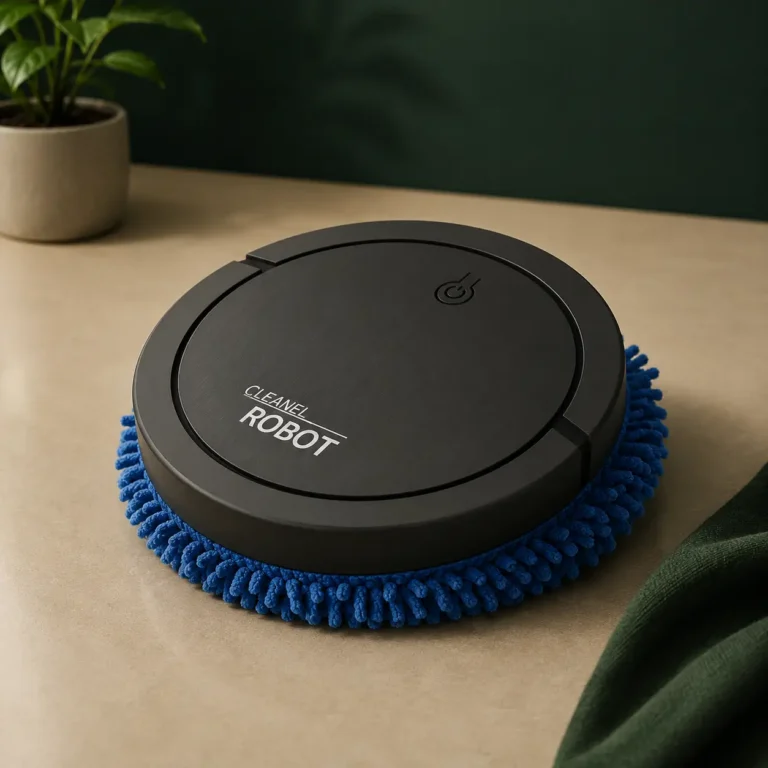
A cleaning robot — also called a robot vacuum or robovac — is a disk-shaped autonomous appliance that drives itself around your floor, sucking up dust, hair, and crumbs while you do something else. The newer 2026 models also mop, navigate using LiDAR or onboard cameras, and dock themselves to recharge. Units sold in Pakistan range from sub-PKR 10,000 imports to premium models from Roborock, Xiaomi, and Eufy at PKR 80,000 and above.
How a cleaning robot actually works
Under the hood, a typical 2026 cleaning robot combines three systems:
- Suction motor — rated in pascals (Pa). Below 2,000 Pa is too weak for hair and sand; 4,000 Pa and above handles most household dust comfortably.
- Navigation — older bump-and-go units bounce around randomly. Modern models use gyroscopes, cameras (VSLAM), or LiDAR to map the room and clean in efficient parallel rows.
- Battery and dock — 90 to 180 minutes of runtime per charge. The robot returns to its dock automatically when the battery runs low.
Many newer models add a mopping pad, an auto-empty bin in the dock, and obstacle avoidance for cables, slippers, and pet messes.
The honest pros and cons
Pros
- Cleans daily without effort — most owners press one button in the morning and forget it.
- Reaches under sofas, beds, and dining chairs where a broom or stick vacuum struggles.
- Reduces airborne dust, which matters in Karachi and Lahore where ambient PM2.5 is high.
- Cuts visible floor-cleaning time for a typical 5-marla home from roughly 5 hours per week down to under 1 hour.
Cons
- Useless on thick durries and traditional carpets — the wheels bog down and suction can’t reach the pile.
- Multi-story homes need carrying the unit upstairs; very few models climb stairs.
- The dust bin is small. Daily users empty it every 1–2 days.
- App and Wi-Fi setup can be fiddly. Cheap units often only run on 2.4 GHz Wi-Fi and refuse 5 GHz networks.
- The mopping function is light cleaning, not a replacement for hand-mopping greasy kitchens.
Are they worth it in a Pakistani home?
This is the question that actually matters, and the honest answer depends on three things specific to your home.
Floor type. Marble, tile, and laminate? Excellent fit. Wall-to-wall thick carpet? A corded upright vacuum will outperform any robot at the same price.
Layout. A single-floor portion or apartment is ideal. Two- and three-story houses force you to carry the robot between floors, which kills the convenience for many owners.
Budget vs. labour cost. A monthly housekeeper in Karachi, Lahore, or Islamabad costs PKR 8,000–20,000. A mid-range robot at PKR 25,000 pays back in two to three months if it replaces some of that labour. It rarely replaces all of it, since dusting, bathrooms, dishes, and laundry still need a person.
Features to look for (in order of importance)
- Suction power: aim for 3,000 Pa or higher. Pakistani homes accumulate dust quickly.
- Battery life: at least 120 minutes for a 5- to 10-marla home.
- LiDAR or VSLAM navigation: worth paying extra for; bump-and-go units bang into furniture and miss spots.
- App control with Wi-Fi scheduling: lets you start and monitor the robot remotely.
- HEPA filter: important for allergy sufferers and Pakistan’s seasonal pollen.
- Self-emptying dock: convenient but adds roughly PKR 20,000 to the price.
- Mopping pad: a nice extra, not a must-have.
- Local warranty: verify the seller honours it — many grey-market imports ship with no real warranty.
Price ranges in Pakistan in 2026
- Entry-level — PKR 8,000 to 15,000: Random navigation, 1,500–2,000 Pa suction, no app. Fine for small flats with flat hard floors. The model AL MEHRAN currently stocks sits at the upper end of this band and is the sweet spot for shoppers who want a working robot without overspending.
- Mid-range — PKR 15,000 to 50,000: App control, smarter navigation, 3,000+ Pa suction, often includes mopping. The biggest jump in real value for most homes.
- Premium — PKR 50,000 and above: LiDAR mapping, auto-empty dock, camera-based obstacle avoidance, 5,000+ Pa suction. Worth it only if you have a larger home and run the robot daily.
How to maintain a cleaning robot
- Empty the dust bin every 1–2 cleanings.
- Wash or replace the HEPA filter monthly.
- Trim hair off the brush roller weekly — long hair tangles around the axles within days.
- Wipe the navigation and cliff sensors on the underside with a dry cloth fortnightly.
- Charge the battery fully before storing for a long break; don’t leave it flat.
Frequently asked questions
Will a cleaning robot work on my marble floor?
Yes. Marble, granite, tile, and laminate are the easiest surfaces for any robot vacuum and where they perform best.
Can a cleaning robot replace my housekeeper?
No — it replaces some of their tasks (daily floor sweeping) but not all. Dusting, bathroom cleaning, dishes, and laundry still need a person.
How long does a cleaning robot last?
A well-maintained mid-range robot lasts 3 to 5 years. The battery is usually the first part to wear out, and on most mid-range models it can be replaced.
Are cleaning robots safe for pets?
Yes. Most modern units have anti-fall cliff sensors so they will not tumble down stairs. Some pets find the noise stressful at first, but they typically adjust within a week.
Do cleaning robots work without Wi-Fi?
Cheaper models work entirely with their physical button — no app or Wi-Fi needed. Mid-range and premium models normally require Wi-Fi for scheduling and mapping features, but they still run a basic clean cycle without an internet connection.
What is the cheapest cleaning robot worth buying in Pakistan in 2026?
Around PKR 12,000 to 15,000. Below that, suction is usually too weak to handle typical Pakistani household dust effectively.
Will a cleaning robot pick up cat or dog hair?
A model rated 3,000 Pa or higher with a tangle-free brush will. Cheap units with weak suction and a standard bristle brush will jam.
The verdict
For a typical 5- to 10-marla single-floor home in Karachi, Lahore, or Islamabad with mostly hard flooring, a cleaning robot in the PKR 15,000–30,000 range is one of the highest-value home appliances you can buy in 2026. For multi-story houses with thick wall-to-wall carpets, your money is better spent on a strong corded upright vacuum.
See the cleaning robot we currently stock — our entry-level pick for hard-floor Pakistani homes.
View Cleaning Robot →